

Planning, collaboration and sustainability
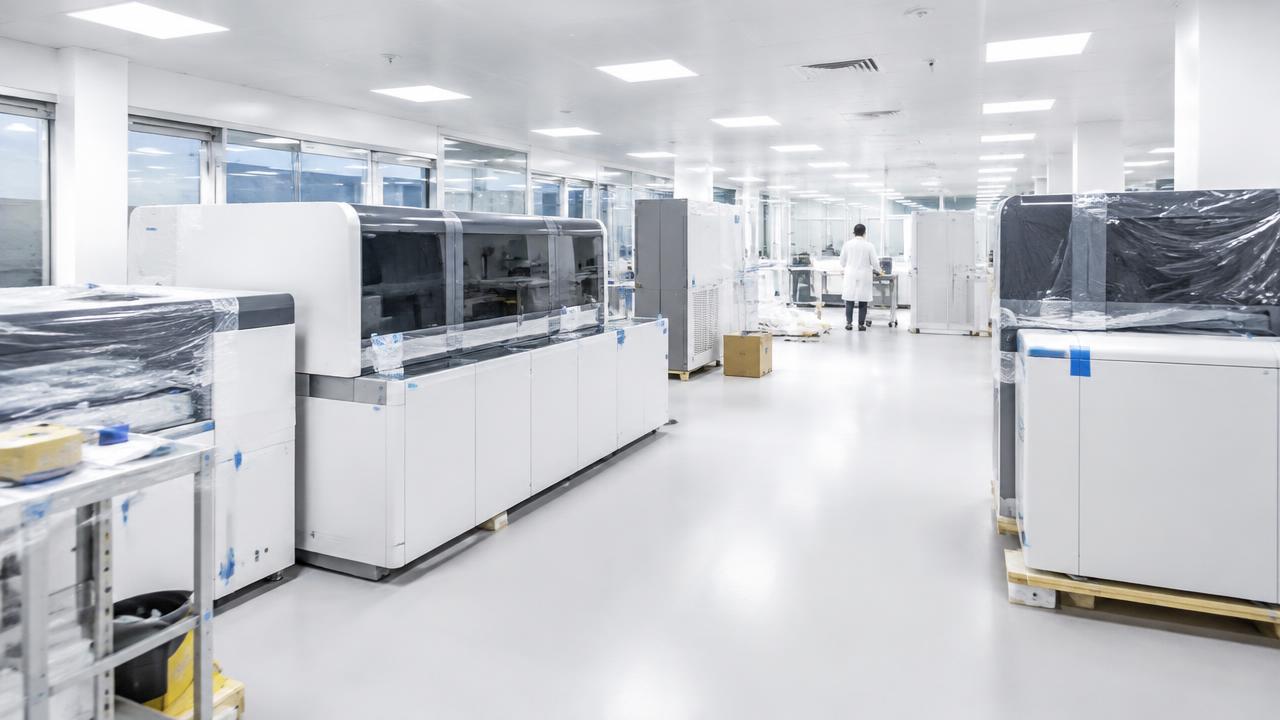
Laboratories lie at the heart of healthcare systems. Today, large-scale laboratory enterprises are being established to meet the needs of entire cities or regions, rather than just a single hospital. In recent years, city hospital projects in Türkiye have represented a significant step in the implementation of such mega-scale laboratories. However, the success of projects of this magnitude is possible not only through technological infrastructure but also through accurate planning, effective collaboration, and sustainable management models.
1. Strategic Planning: The First Step on the Road to Success
The most critical phase of any large-scale laboratory project is planning. In a system where hundreds of thousands of tests are performed and thousands of devices and hundreds of personnel are managed, the margin for error is virtually zero. Strategic planning must provide clear answers to the following questions:
- What will be the daily test capacity of the laboratory?
- Which equipment fleet will be able to handle which workload?
- How will consumables logistics be maintained without interruption?
- Which data management systems will be integrated?
- How will human resources be organized?
Although the planning process in Türkiye is often shaped by tenders, especially in public projects, successful projects differentiate themselves here: by involving all stakeholders in the process from the very beginning.
2. Collaboration: Managing Multi-Stakeholder Structures
Large-scale laboratory projects cannot be carried out by the power of a single institution alone. Here, manufacturers, software developers, public authorities, logistics providers, and healthcare institutions all sit at the same table. The critical element for success is the partnership model.
- The Public Sector: Regulatory and supervisory power
- Manufacturers: Equipment and technical service support
- Software Companies: Data and process management infrastructure
- Operating Company: Organizational integrity and operational continuity
This collaborative structure is clearly visible in city hospital projects in Türkiye. On a global scale, the "Public-Private Partnership (PPP)" model is the most common form of implementation for large laboratory projects.
3. Operational Agility: Being Ready for Change
Healthcare is a dynamic field. Sudden outbreaks, new diagnostic methods, or regulatory changes can alter the laboratory workload in a short time. The success of large-scale laboratory projects lies in their ability to adapt quickly to this change.
- Modular equipment infrastructure
- Flexible shift and personnel planning
- Capacity to rapidly implement new test types
During the pandemic, this agility gained great importance in Türkiye. In global examples, particularly in Germany and the USA, large laboratory chains increased their agility by using AI-based capacity planning tools.
4. Sustainability: Long-Term Success
The fundamental difference of large laboratory projects is not just that they are established and commissioned, but that they are operated sustainably for years. For sustainability:
- Long-term contracts for consumable and equipment costs
- Continuous training of personnel
- Maintaining standards in data management
- Observance of energy and environmental factors
Sustainability in the healthcare sector in Türkiye is no longer an expectation but a necessity. The environmental impacts of laboratories (e.g., waste management) are also on the agenda within European Union standards.
5. Data and Software: Making the Invisible Visible
The most overlooked but most critical element in large-scale projects is data management.
- KPI-based reporting
- CPT (Cost per Test) analyses
- Device-based performance monitoring
- Consumables consumption trends
This data guides not only daily operations but also strategic decisions. Data-driven laboratory management has now become a standard on a global scale. While significant steps are being taken in this area in Türkiye, there is still progress to be made.
6. Diacore’s Experience
As Diacore, we have participated in many large-scale laboratory projects with our experience spanning over 20 years. Our approach is based on three main pillars: 1. Project Management Discipline: Executing every project with planning and tracking systems that comply with international standards. 2. Partnership Model: Establishing equal and transparent cooperation with all stakeholders. 3. Data and Software Integration: Establishing reporting and decision support systems that make the invisible visible. In this way, we ensure not only the setup but also the long-term operational success of our projects.
Conclusion
Large-scale laboratory projects are one of the most critical investments shaping the future of healthcare systems. However, the success of these projects is not just about technology.
True success emerges when accurate planning, effective collaboration, operational agility, sustainability, and data-driven management come together.
Türkiye has the potential to set an example in its region with its experience in this field. Diacore’s mission is to unlock this potential and produce projects at global standards.